

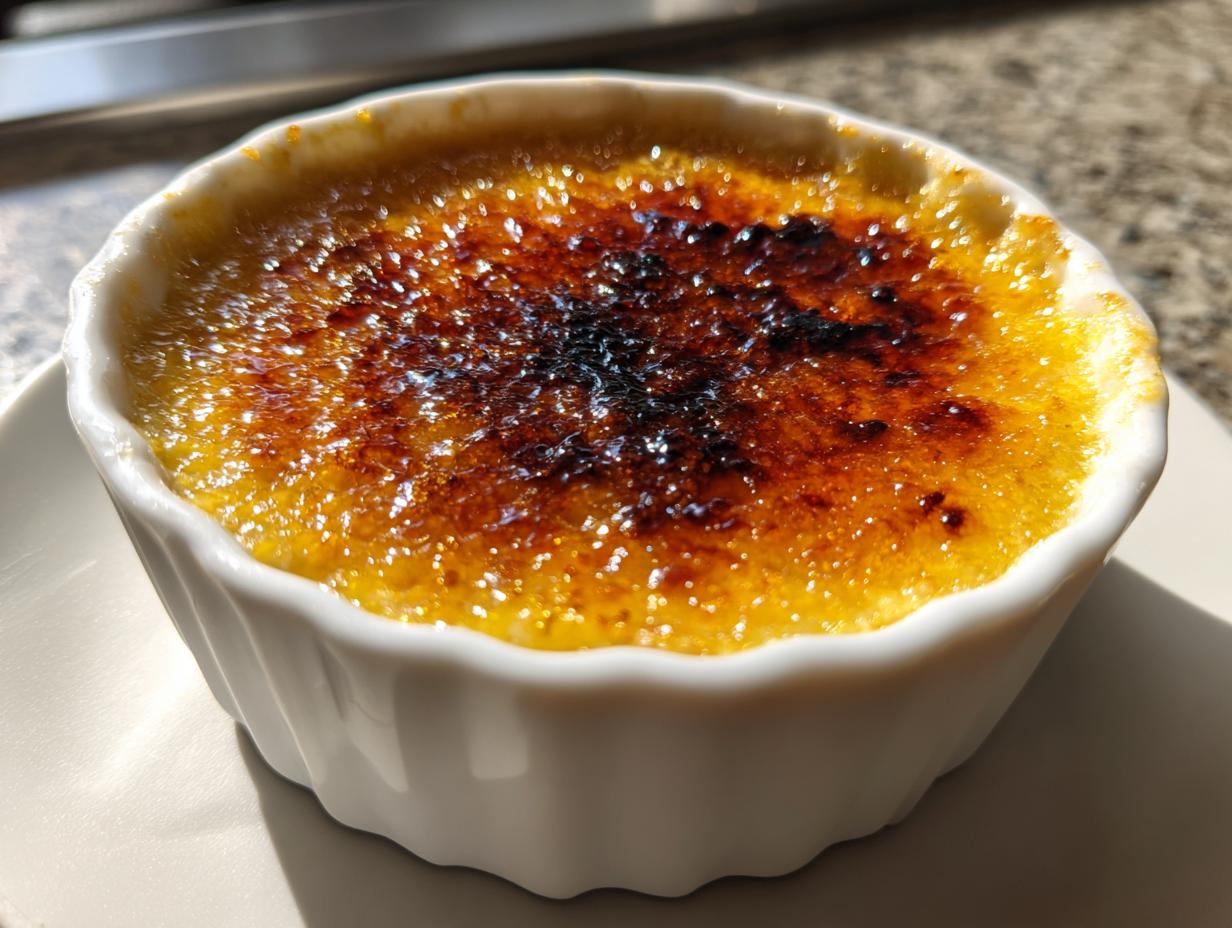
I know, I know—Crème brûlée seems like something that should only be made by a fancy pastry chef in Paris, right? But trust me, pulling off that shattering, glass-like sugar top over a silky, cool vanilla custard dessert is totally within reach in your own kitchen! This classic Crème brûlée recipe is exactly how we bring five-star elegance home for dessert night. It’s all about mastering a few simple steps. That’s Rosa Sterling’s whole philosophy, isn’t it? Taking something that looks impossibly complex and proving that, with a little focus, anyone can create something truly spectacular and reliable. You can read more about how her home-kitchen ethos shapes all our recipes here: Rosa Sterling’s approach to reliable cooking.
- Why This Classic Creme Brulee Recipe Delivers Perfection
- Ingredients for the Best Creme Brulee
- Step-by-Step Instructions for Perfect Creme Brulee
- Tips for Success When Making Creme Brulee
- Serving Suggestions for Your Elegant French Dessert
- Storing and Reheating Your Creme Brulee
- Frequently Asked Questions About Creme Brulee
- Understanding the Nutrition in This Vanilla Custard Dessert
- Share Your Creme Brulee Success
Why This Classic Creme Brulee Recipe Delivers Perfection
When you’re aiming for an elegant French dessert, nobody wants to crack open their ramekin only to find scrambled eggs instead of smooth custard. That’s just heartbreaking! Our Crème brûlée recipe is set up specifically to avoid those kitchen disasters. We aren’t messing around here; we want guaranteed results that wow your guests.
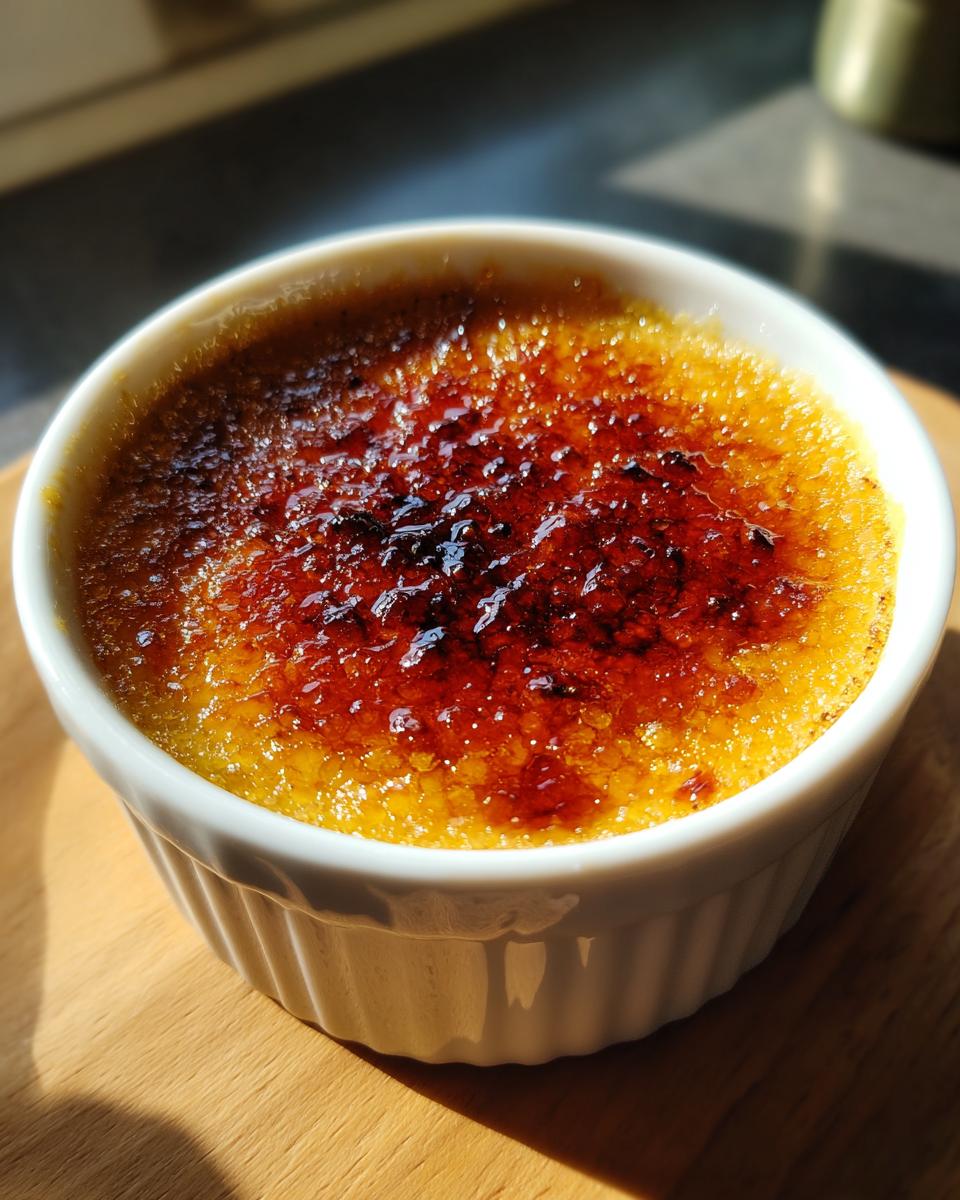
- Guaranteed silky base thanks to careful tempering.
- The bain-marie (water bath) ensures the heat is gentle.
- A foolproof method for that incredible, shattering caramelized sugar topping.
Achieving the Silky Vanilla Custard Dessert Texture
The secret weapon for that stunning vanilla custard dessert texture is slowing things down with heat. We warm the cream gently; it should never boil! Then, when we introduce that hot cream to the egg yolks, we do it oh-so-slowly while whisking like crazy. That’s tempering, my friend! It keeps those yolks happy and smooth. Plus, baking it inside that water bath—the bain-marie—is the key. It surrounds the custard with soft, damp heat, so you get that perfect, delicate jiggle instead of a rubbery puck. Make sure you splurge on really good vanilla extract; it shines through beautifully!
Ingredients for the Best Creme Brulee
When making the ultimate Crème brûlée, you need very few things, which means every single ingredient has to be top-notch! Don’t try to cut corners here; the simplicity demands quality. We are relying pretty heavily on those egg yolks and that beautiful heavy cream to create the richness that makes this classic dessert famous.
You’ll need six large egg yolks specifically—don’t use the whites! We also need two cups of heavy cream, half a cup of granulated sugar for the custard itself, plus extra sugar just for that glorious torching moment. Don’t forget a teaspoon of high-quality vanilla extract and just a tiny pinch of salt to wake up all those flavors.
Ingredient Notes and Substitutions for Your Creme Brulee
Because there are so few components in this recipe, the quality really matters, trust me on this! You absolutely have to use high-quality vanilla extract here; artificial stuff will taste flat against that rich cream. I know some recipes try to slip in whole milk, but please don’t. That two-to-one ratio of heavy cream to the rest of the liquids is what gives you that dense, luxurious mouthfeel that true Crème brûlée needs. If you are tempted to substitute, use a good vanilla bean paste instead of extract for an even more beautiful, speckled look!
Step-by-Step Instructions for Perfect Creme Brulee
Alright, this is where the magic really happens, but don’t panic! We’re just following a few key rules to make sure your Crème brûlée comes out flawless. First things first, get your oven humming at 300°F, and set up those six little ramekins inside a deep baking dish. Remember, we are baking these babies gently!
Next, gently warm up that heavy cream until you see just the tiniest simmer around the edges—this happens fast, so watch it closely, then take it off the heat immediately. While that’s happening, whisk your yolks and half a cup of sugar until they lighten up. Now comes what I call The Critical Step: tempering. You have to slowly drizzle that hot cream into the egg mixture while you whisk non-stop. If you dump it all in at once, you end up with sweet scrambled eggs, and nobody wants that for their elegant French dessert!
Baking the Custard: Mastering the Delicate Jiggle
Once those eggs are tempered and everything is strained for perfect smoothness (always strain, it cleans up any lumps!), pour the mixture evenly into your ramekins. Now for the water bath—the bain-marie. Carefully fill that outer baking pan with hot water until it comes halfway up the sides of the ramekins. I use water that’s already boiling because I want the baking process to start right away, which gives me more control.
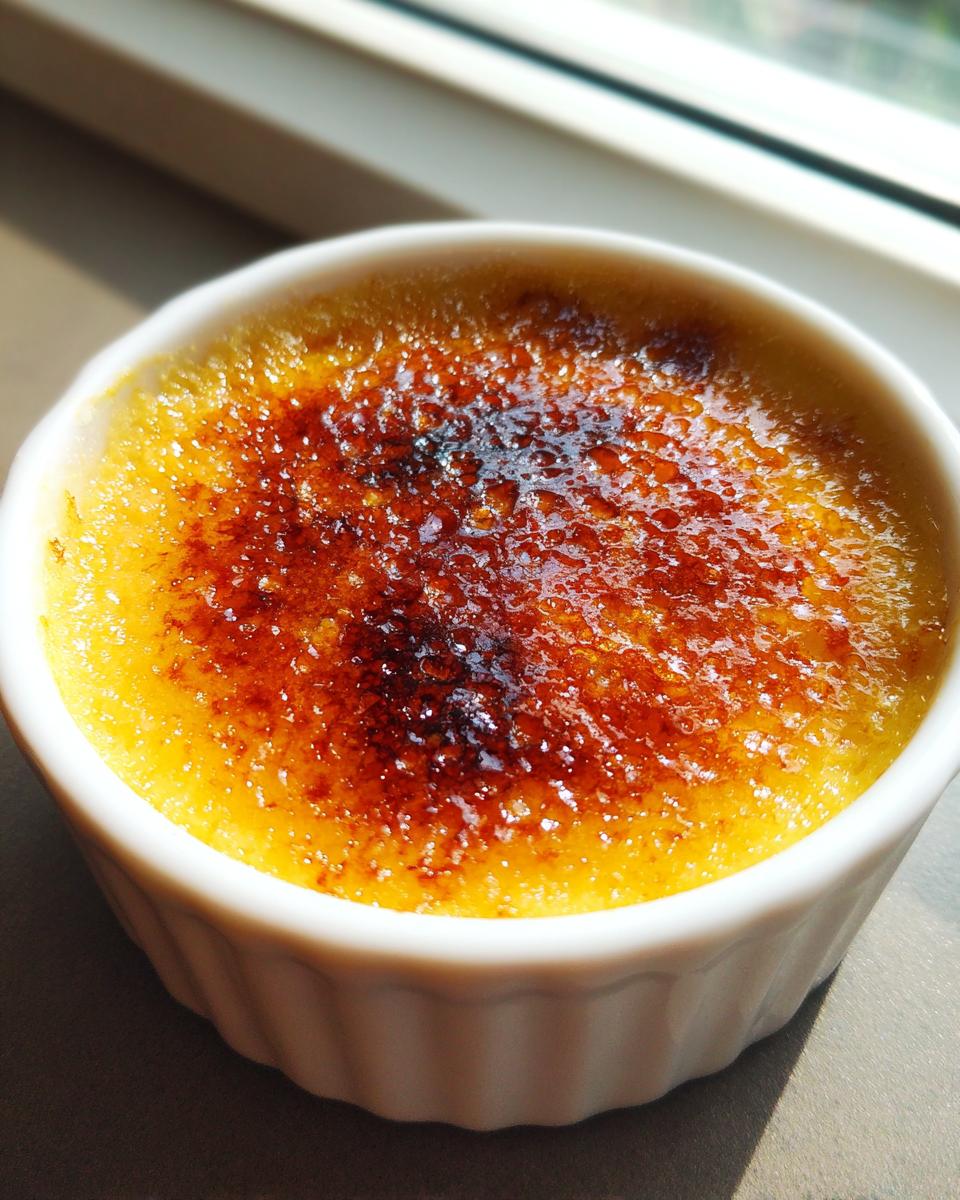
These go into the 300°F oven for about 30 to 40 minutes. You’re looking for the edges to be firm, but when you give the pan a little nudge, you want the very center to have a soft, gentle jiggle. If it looks completely still, it’s overbaked. Leave it in there too long, and you lose that silky texture we worked so hard for!
Creating the Signature Caramelized Sugar Topping
This is the moment everyone waits for, but patience is required first! Once they pass the jiggle test, carefully pull them out—water is hot!—and let them cool completely on a rack. Then, they HAVE to chill for at least four hours, but honestly, overnight is when they are truly the best. The cold custard is non-negotiable for the perfect crack.
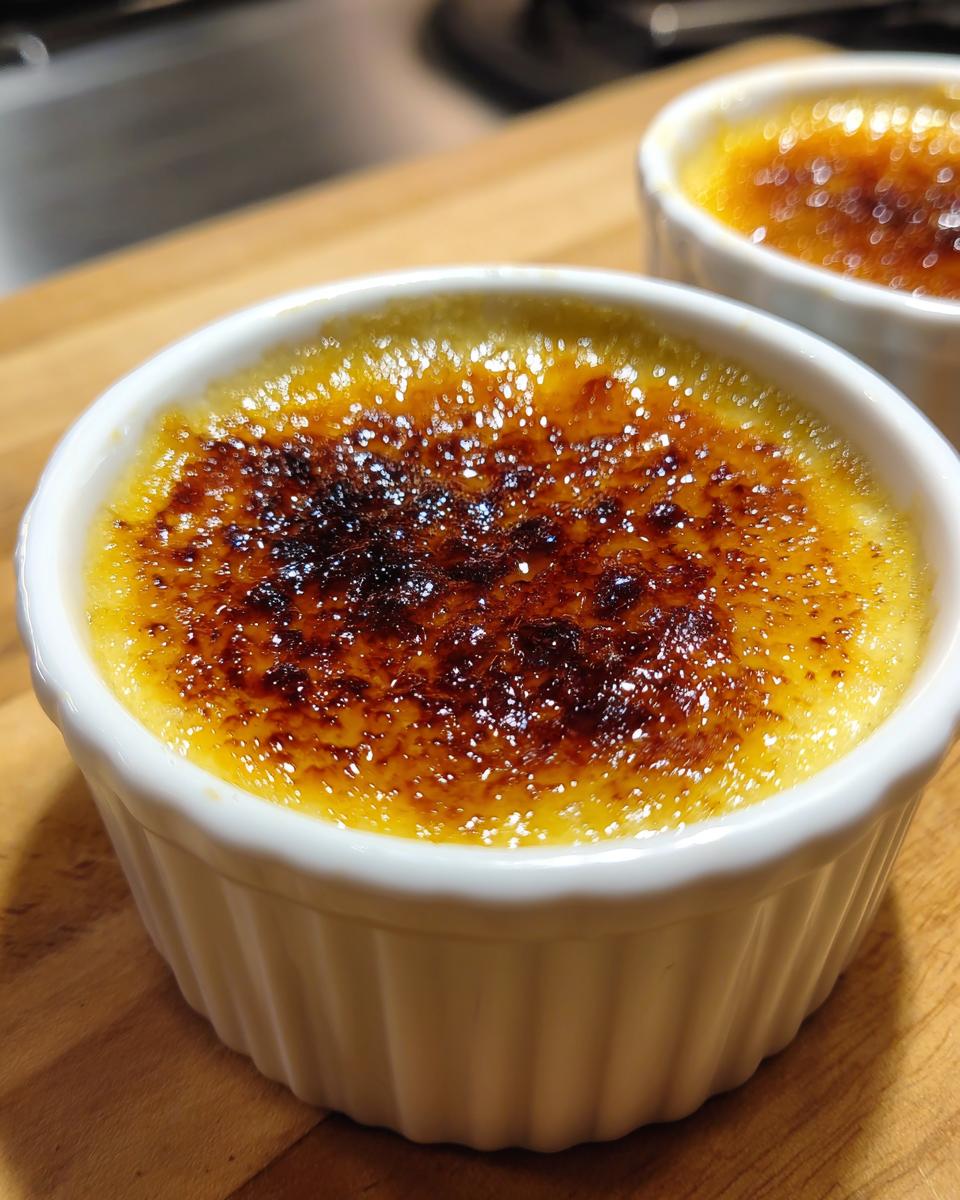
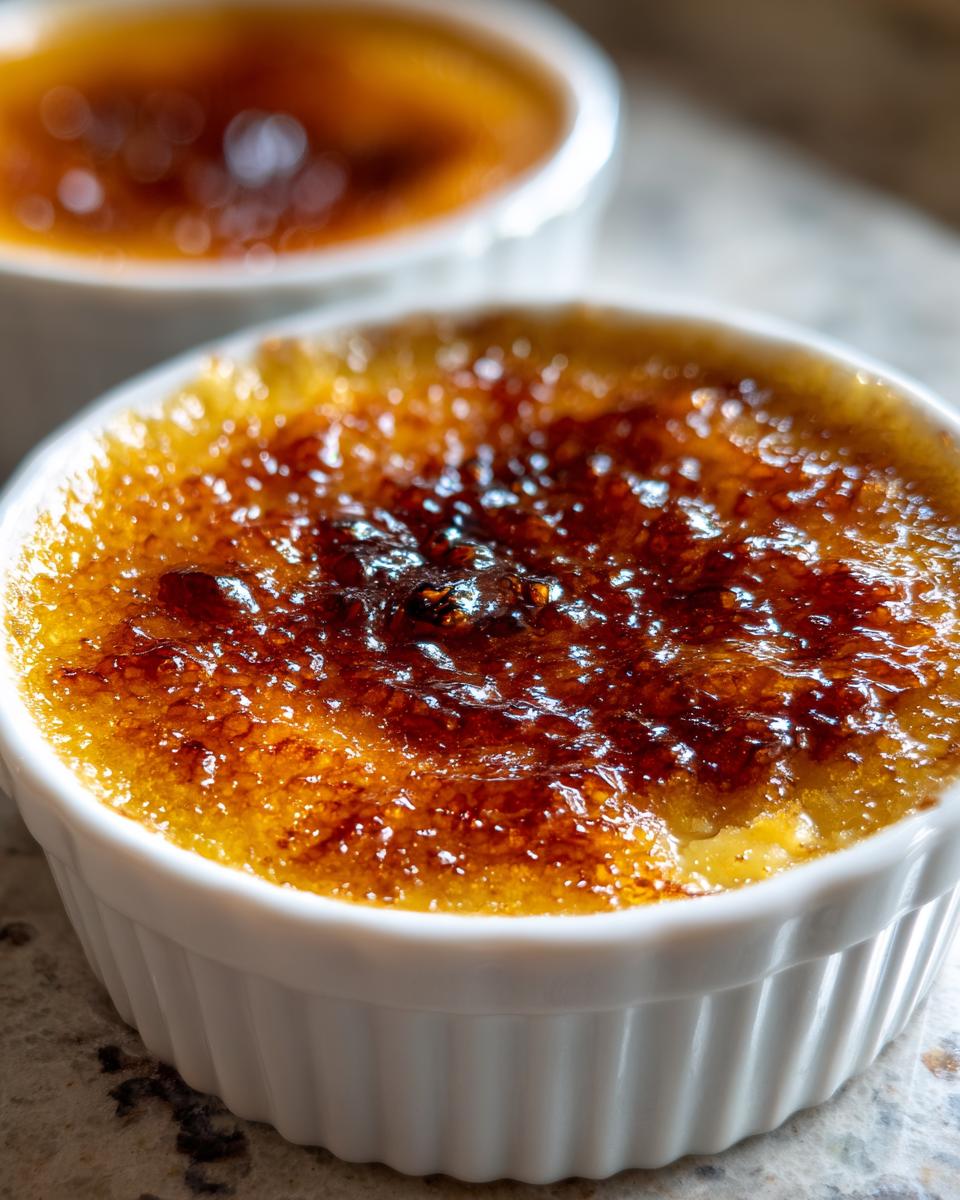
When serving, sprinkle an even, thin layer of sugar over the top of that chilled vanilla custard dessert. Grab your kitchen torch—this is the fun part! Sweep the flame evenly across the sugar until it darkens to a beautiful amber color. You have to move fast so you don’t warm up the cold custard underneath. If you don’t have a torch, you can flash it under the broiler, but watch it like a hawk—it goes from perfect to burnt in about three seconds flat!
Tips for Success When Making Creme Brulee
Even with a great recipe, sometimes the Crème brûlée doesn’t cooperate! Don’t worry, I’ve got the little fixes for the most common issues. First, if you see tiny bubbles on the surface of the custard after straining it, just use a kitchen lighter or a small propain torch to quickly burn those bubbles off before baking. It sounds silly, but it keeps the top pristine.
When you go to sprinkle that final sugar layer, make sure it’s a super even, thin coat. Too thick in one spot means you’ll have a burnt bit sitting right next to a sugary puddle when you crack it. Also, remember that chilling time is mandatory; an under-chilled base melts instantly when the torch hits it, ruining that glorious contrast. We want cold custard and warm, brittle caramel on our Crème brûlée!
Serving Suggestions for Your Elegant French Dessert
Okay, you’ve achieved the perfect crack—now for presentation! This rich vanilla custard dessert looks incredible all by itself, of course. But if you want to elevate it even more for your guests, a few simple additions go a long way. I love tucking a few fresh raspberries or thin slices of strawberry right next to the ramekin.
The slight tartness of the berries cuts right through the richness of the cream beautifully. If you are serving this after a large dinner, a tiny cup of strong espresso served alongside it is heavenly. It echoes that bitter, lovely note from the caramelized topping and just feels so wonderfully sophisticated!
Storing and Reheating Your Creme Brulee
Here’s the best part about this classic Crème brûlée: you can—and really *should*—make the custard base ahead of time! I usually make mine a full day before I plan to serve them. Just make sure the ramekins are completely cooled, covered tightly with plastic wrap, and kept in the fridge. They are perfect for up to three days chilled like this.
But listen close: you absolutely cannot torch the topping until the very second you plan to serve them. If you torch it early, that glorious burnt sugar will melt into the cold custard, and poof! No crunch left. So, chill the base, keep the extra torching sugar stored in a dry spot nearby, and torch away right before your guests sit down. That perfect snap depends on it!
Frequently Asked Questions About Creme Brulee
Why does my custard still look wet in the middle?
That slight jiggle is what we are actually aiming for! Remember, you want the edges set, but the center should still look a little softer when gently shaken. It continues to set up as it cools completely in the fridge. If it’s more liquid than a gentle wobble, it probably needed five more minutes in that water bath. Don’t worry about it too much; it’s still a delicious vanilla custard dessert, even if the crack isn’t perfect!
Can I make this without a kitchen torch?
Gosh, I wish I had a better answer, but the torch is really where you get that ideal, fast caramelization without heating the cold custard underneath. If you absolutely cannot get a torch, you can try using your broiler, but you have to treat it like a science project! Place the sugared ramekins on a baking sheet high up under a very hot broiler, and watch every single second. It might take just a minute or two, but it burns so easily!
What’s the best way to time this for a dinner party?
This elegant French dessert is actually perfect for planning ahead! You can bake the custards and chill them completely for up to two days. I usually prepare them the morning before the party. The only thing you do right before serving is sprinkle that sugar and torch it. Seriously, 5 minutes before you bring it to the table, and you’ll have that show-stopping sound of the crack!
Do I have to use such deep ramekins?
You can use shallower dishes, yes, but you must adjust your baking time a lot. Shallow dishes cook much faster, meaning you might start seeing set edges in just 20 minutes, which doesn’t give the custard time to develop that deep, creamy flavor. For the best results and that classic, thick base, try to stick close to a 6-ounce ramekin size.
Understanding the Nutrition in This Vanilla Custard Dessert
I always say, when you’re eating something this rich and wonderful, you just enjoy every single bite! But since I know some of you are curious about the details of this classic vanilla custard dessert, I jotted down the standard estimates. Remember, these numbers are based on using standard heavy cream and granulated sugar, like the recipe calls for.
In one typical serving (one ramekin), you’re looking at about 380 calories. It is naturally higher in fat, around 30 grams, because, well, that’s where the flavor is in that heavy cream! You get about 26 grams of carbohydrates and a nice little protein boost of around 8 grams. These estimates don’t factor in the extra sugar you add right before torching to make that beautiful crust—that’s the fun bit that we don’t count!
Share Your Creme Brulee Success
I just cannot wait to hear how your Crème brûlée turned out! Did you get that amazing, loud *crack* when you tapped the top? Seriously, that sound is the best part of making this dessert. Head over to our contact page here and let me know your favorite part—was it the silky custard or mastering that caramelized sugar topping? Please leave a rating below; it really helps us know we’re delivering reliable recipes!
PrintClassic Crème Brûlée Recipe
Make a restaurant-quality crème brûlée with a rich vanilla custard base and a perfectly crisp, caramelized sugar topping.
- Prep Time: 15 min
- Cook Time: 40 min
- Total Time: 4 hours 55 min
- Yield: 6 servings 1x
- Category: Dessert
- Method: Baking and Torching
- Cuisine: French
- Diet: Vegetarian
Ingredients
- 6 large egg yolks
- 2 cups heavy cream
- 1/2 cup granulated sugar, plus extra for topping
- 1 teaspoon vanilla extract
- Pinch of salt
Instructions
- Preheat your oven to 300 degrees Fahrenheit (150 degrees Celsius). Place six 6-ounce ramekins in a deep baking pan.
- In a medium saucepan, heat the heavy cream over medium heat until it just begins to simmer around the edges. Do not boil. Remove from heat.
- In a separate bowl, whisk the egg yolks and 1/2 cup of sugar together until the mixture is pale yellow and smooth. Whisk in the vanilla extract and salt.
- Temper the egg yolks: Slowly pour about one cup of the hot cream into the egg mixture while constantly whisking. This prevents the eggs from scrambling.
- Pour the tempered egg mixture back into the saucepan with the remaining cream. Whisk gently to combine everything.
- Strain the custard mixture through a fine-mesh sieve into a large measuring cup or bowl to remove any lumps.
- Divide the custard evenly among the six ramekins.
- Carefully pour hot water into the baking pan until the water reaches halfway up the sides of the ramekins. This creates a water bath (bain-marie).
- Bake for 30 to 40 minutes, or until the edges are set but the centers still have a slight jiggle when gently shaken.
- Remove the ramekins from the water bath and let them cool completely on a wire rack. Once cool, cover them with plastic wrap and chill in the refrigerator for at least 4 hours, or preferably overnight.
- Before serving, sprinkle an even, thin layer of granulated sugar over the top of each chilled custard.
- Use a kitchen torch to melt and caramelize the sugar until it forms a hard, amber-colored crust. Work quickly to avoid heating the custard underneath.
- Let the caramelized sugar cool and harden for a few minutes before serving. Tap the top with a spoon to hear the crack.
Notes
- Use high-quality vanilla extract for the best flavor.
- Do not skip the water bath; it provides gentle, even heat necessary for a smooth custard texture.
- If you do not have a kitchen torch, you can place the sugared ramekins under a preheated broiler for 1-2 minutes, watching constantly to prevent burning.
Nutrition
- Serving Size: 1 ramekin
- Calories: 380
- Sugar: 25
- Sodium: 55
- Fat: 30
- Saturated Fat: 18
- Unsaturated Fat: 10
- Trans Fat: 1
- Carbohydrates: 26
- Fiber: 0
- Protein: 8
- Cholesterol: 320